Among all formulation techniques, emulsification is considered the most challenging. It takes time, practice, and many failures before getting it right — but once you master it, you can create any lotion, cream or moisturiser you want, entirely from natural ingredients.
What is an Emulsion
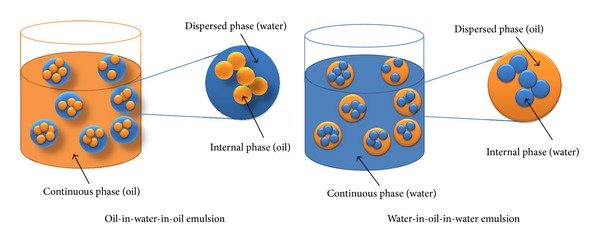
Homemade lotions, creams and moisturisers are all emulsions and are made the same way with mostly the same ingredients. An emulsion is a heterogeneous system of two immiscible liquids — water and oil — one of which is dispersed as liquid droplets in the other. Oil and water do not mix, so we need emulsifiers — together with processing methods — to keep them emulsified.
Oil-in-Water (O/W)
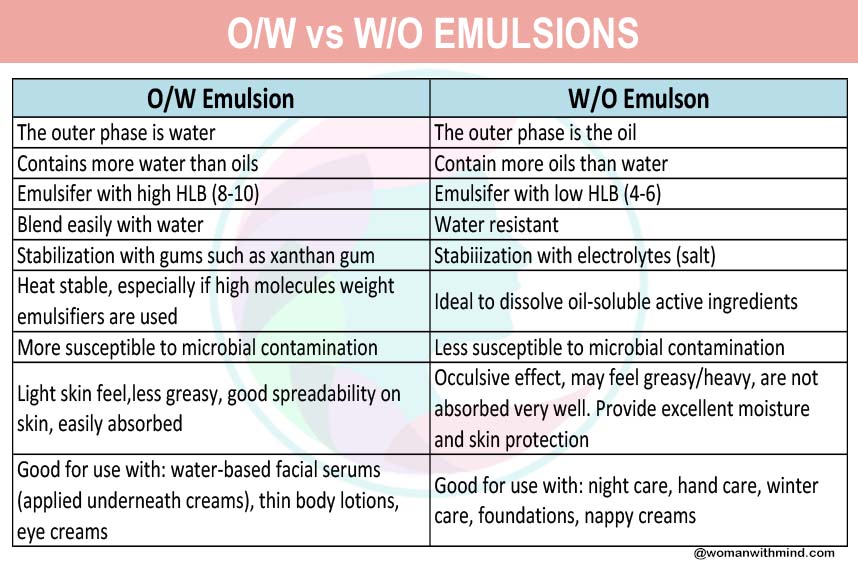
Water phase is the outer phase. Emulsions are either liquid (lotions and milks) or semi-solid (creams). Feel lighter over the skin. More stable and generally less costly to produce. This is the type we learn to make.
Water-in-Oil (W/O)
Water is the inner phase. Provides better protection, especially important for mature and dry skin and night care. Leaves a richer, more occlusive, oily feeling when applied. Higher oil concentration.
What is an Emulsifier
An emulsifier contains both a water-loving head and an oil-loving tail, acting as an additional agent to form a homogeneous mixture keeping water and oil together. The nature of the emulsifier determines whether an emulsion is O/W or W/O — you cannot use a W/O emulsifier to create an O/W emulsion.
- O/W emulsifiers — keep oil drops packed in water
- W/O emulsifiers — keep water drops packed in oil
HLB (Hydrophilic-Lipophilic Balance) around 4–6 indicates a W/O emulsifier. HLB around 8–16 indicates O/W. For modern PEG-free natural emulsifiers, many supplier datasheets simply state the emulsion type rather than HLB value.
How to Tell W/O from O/W — The Water Test
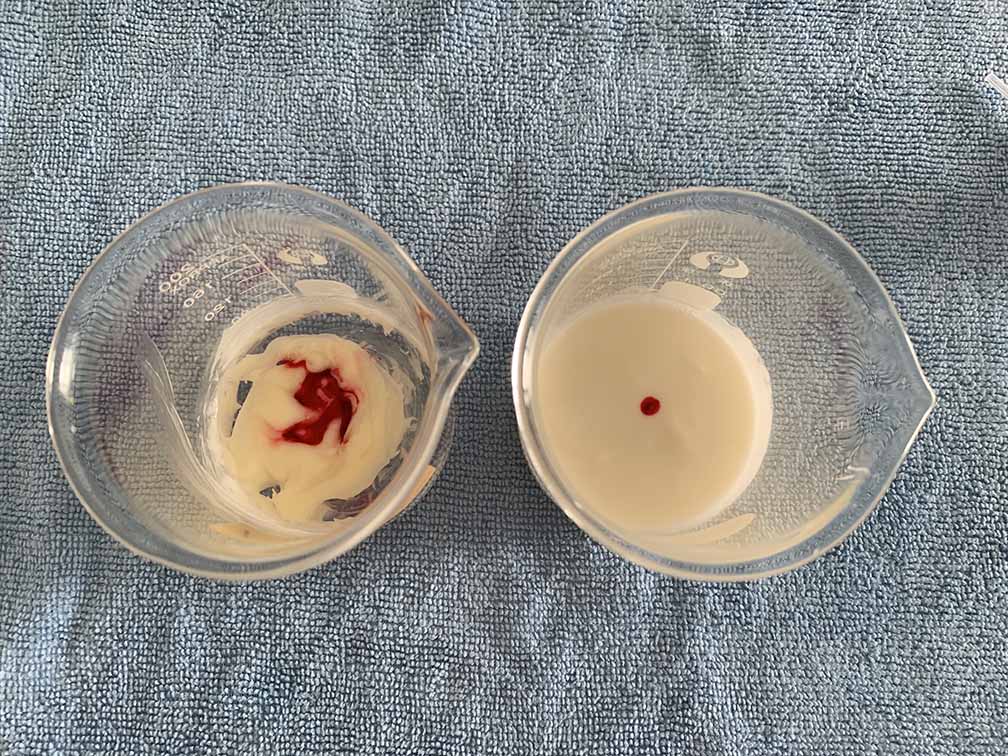
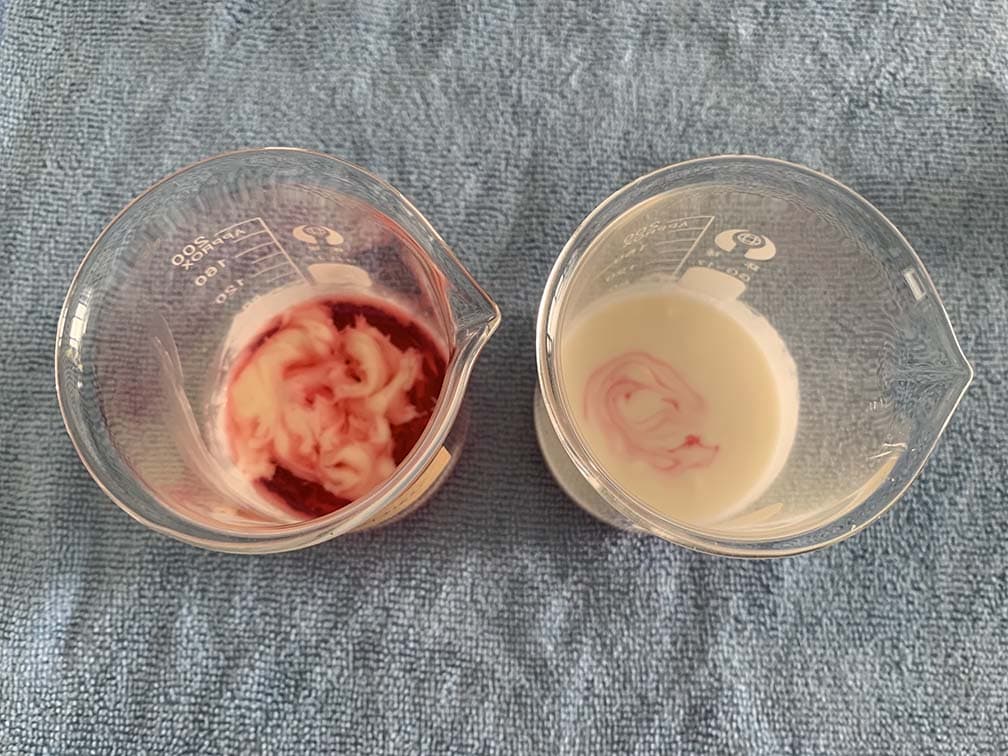
A simple test can disclose the nature of a cosmetic emulsion. Add a drop of water-based food colour to each emulsion and stir:
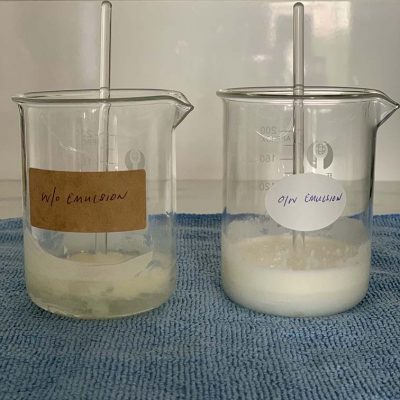
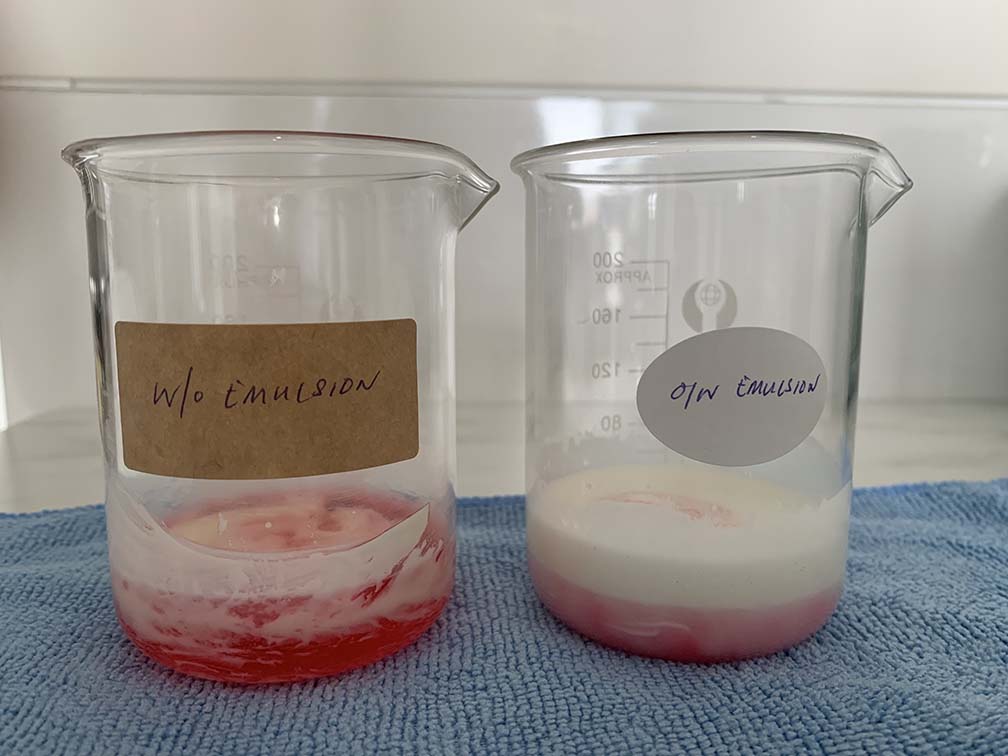
The W/O emulsion repels water and stays white in a surrounding pink solution. The O/W emulsion blends with the water and turns pink — showing the colour has dispersed through the emulsion.
A complete guide to formulating natural lotions and creams.
My How to Make Lotions & Creams e-book covers the full emulsification process — formula flowcharts, starter formulas for every skin type, emulsifier selection, pH measurement and how to troubleshoot common problems.
Making a Hot Process Emulsion — Step by Step
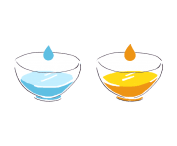
Step 1 — Prepare Your Two Phases
Create the 2 phases of emulsification separately. Weigh the oil phase (all oils and butters melted and blended together) and the water phase (water, hydrosols, humectants). Weigh all ingredients in percentages that total 100%.
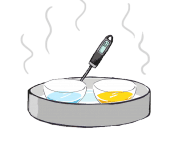
Step 2 — Heat Both Phases
Heat both phases to 70–75°C / 158–167°F in a bain-marie. Both phases must reach the same temperature simultaneously before combining.
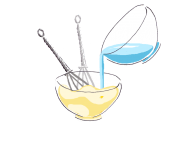
Step 3 — Emulsify
Slowly pour the water phase into the oil phase while mixing continuously with a tiny wired whisk or electric handheld mini mixer for 2–5 minutes. Continue blending until the product has cooled and the emulsion is stable, thick and creamy.
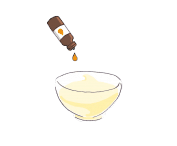
Step 4 — Add Cool Down Phase
When the emulsion cools to below 40°C / 99°F, add your cool down phase ingredients — essential oils, heat-sensitive actives and preservative. Mix well. Because the lotion contains water, a preservative is necessary to protect from bacteria, fungus and yeast.
Allow the emulsion to continue cooling to room temperature. Pour into sterilised jars or bottles only once fully cooled, otherwise there will be condensation inside the container. Your emulsion may reach its final consistency after 24 hours — observe and take notes, and don't be disheartened if the first attempt isn't perfect. Emulsification takes practice.
Troubleshooting Common Problems
- Emulsion has separated: Add 0.3% xanthan gum to the water phase to thicken. Ensure both phases were at 70°C when combined.
- Emulsion is too runny: Reduce the water phase percentage and increase oil/butter. Adjust your emulsifier percentage accordingly.
- Emulsion is too thick: Reduce oil/butter and emulsifier percentages.
- Soapiness: Thicken the water phase. Xanthan gum makes soapiness worse — try a different gum at lower levels.
Guides & Printables for Skincare Formulators
These e-books and tools are designed to complement what you've learned about emulsification — helping you formulate natural lotions and creams with confidence.
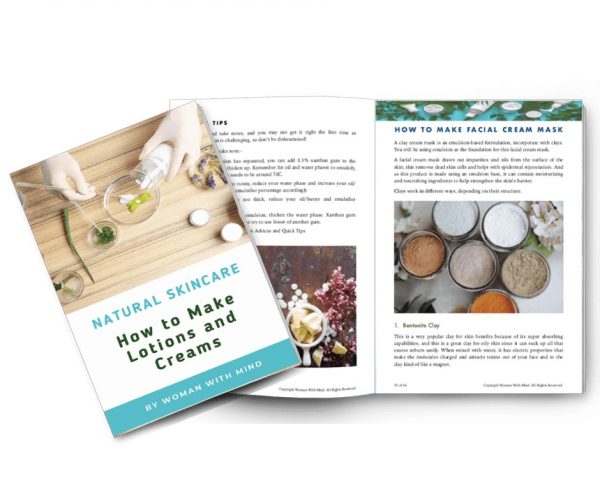
How to Make Lotions & Creams
Complete guide to formulating natural lotions and creams — emulsification, formula flowcharts, starter formulas for all skin types.
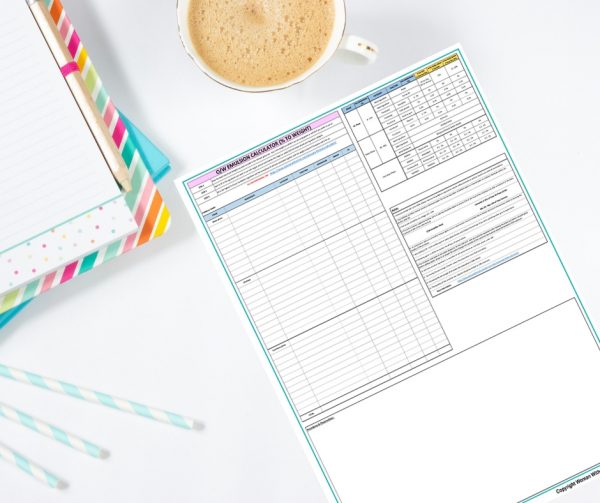
Emulsion Calculator (Excel & PDF)
Automatically calculates your lotion or cream formula by phase and batch size — starter formulas and warning alerts built in.
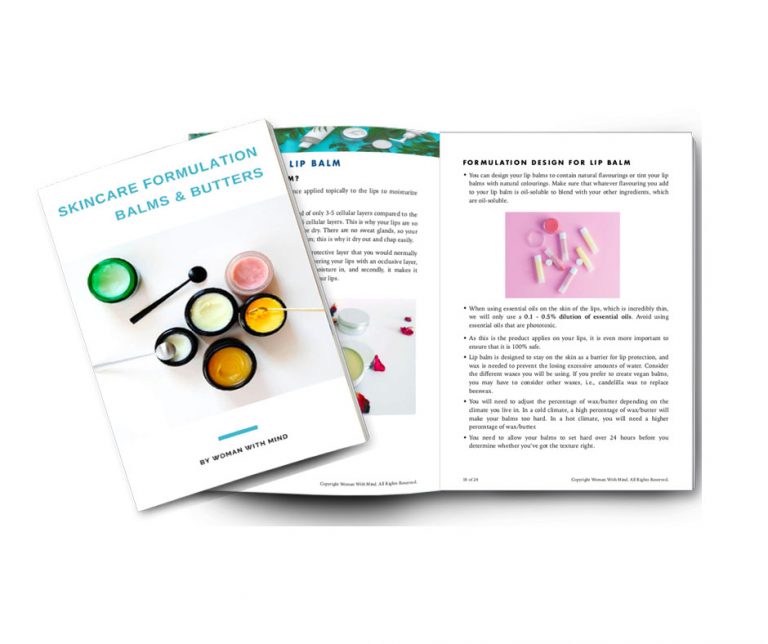
Balms & Butters Formulation
Anhydrous cream formulas — body butters, facial balms and lip balms. A great starting point before tackling emulsions.
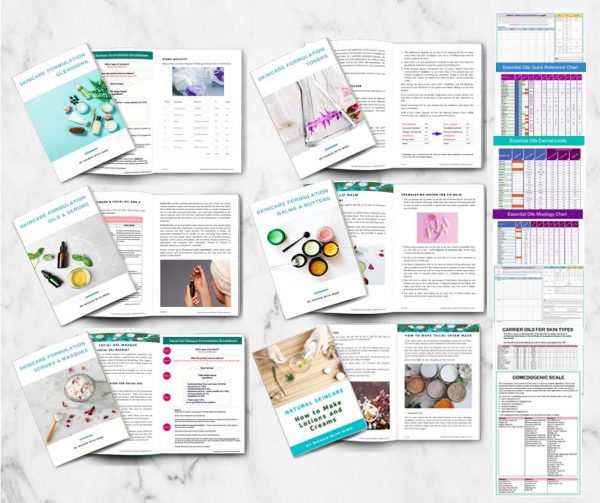
Skincare Formulation Super Bundle
Every formulation guide including lotions, creams, serums, cleansers, toners and more — save 20%.
More Formulation Guides
Continue learning with these related guides from the Woman With Mind blog.
Conclusion
Making your own lotion and cream comes down to understanding your two phases, your emulsifier, and your preservation system. The hot process emulsification method is reliable and reproducible once you get the hang of it. Keep detailed notes on every batch, don't be discouraged by early failures, and use the Emulsion Calculator to take the guesswork out of your formula structure.