You may have started DIY skincare following recipes in drops, cups or teaspoons. Measurements in volume are less accurate than weight because the specific gravity of each ingredient is not taken into account. This is why it is always best to formulate in percentage and work out a weight-based formula for your batch size.
Calculation in Percentages
A formula should always be written showing the percentage of each ingredient, and your formula must always equal 100%. Here is an example of how a formula is structured:
| Stage | Ingredient | Category | % | Gram |
|---|---|---|---|---|
| A | Shea Butter | Foundation | 54% | 27g |
| A | Mango Butter | Foundation | 21% | 10.5g |
| B | Rosehip Oil | Foundation | 21% | 10.5g |
| C | Vitamin E | Additive – Antioxidant | 4% | 2g |
| — | Total | 100% | 50g | |
Steps to Calculate Your Formula
- Decide on the batch size of your product you want to make
- Based on the formulation composition, decide on the percentage of each category and function
- Work out the weight-based formulation
For the example above, the total weight (batch size) of the recipe is 50g. The formula to convert percentage to weight is:
The Percentage Formula
A = Percentage of ingredient (%) · B = Total weight of the batch size (g)
(A / 100%) × B = Weight in grams
Example: Shea butter at 54% in a 50g batch:
54 (%) ÷ 100 (%) × 50g = 27g
Repeat for each ingredient. Your formula should always add up to 100% (give or take a tiny decimal place).
Volume versus Weight
— Volume only is fine for: facial toners, mists, body sprays, and facial oils where only liquid oils are used.
— Weight is necessary for: creams, lotions, scrubs, masques, butters, balms and facial oils that contain solid butters.
To keep things simple and accurate, measure everything — even liquid formulas — in grams.
Use a built-in formula calculator that does all the work for you.
The Recipe Formula Calculator records your formulas as percentages, converts them into any batch size by weight, and includes warning alerts if any ingredient category is out of the recommended range.
General Recipe Formula Calculator
The Formula Calculator spreadsheet has built-in calculations and formulas that do all the hard work for you. The spreadsheet records your formulas as percentages and converts them into any amount by weight. It also includes warning alerts to ensure each category of ingredients is within the recommended range.
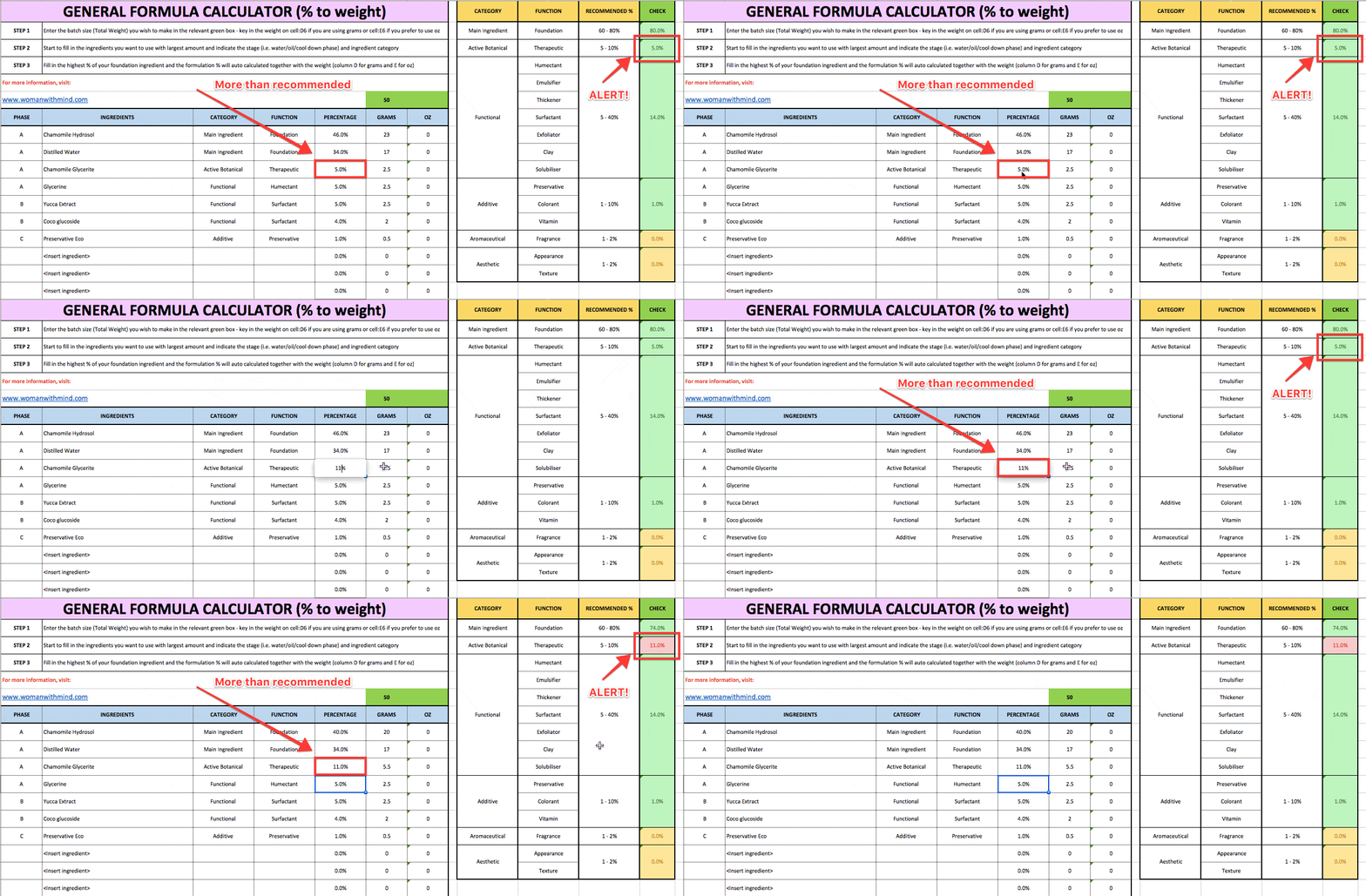
*The warning alert only serves as a reference. You will have to keep trying and experimenting to create your own products.
Emulsion Calculator
The water phase (hydrophilic) and the oil phase (lipophilic) of an emulsion cannot be combined without an emulsifier. The Emulsion Calculator is an Excel Worksheet that quickly and easily allows the formulator to calculate the requirements for emulsion.
There are 2 types of emulsifiers:
- Oil-in-water (O/W) emulsifiers — keep oil drops packed in water. More liquid feel (lotions and milks) or semi-solid (creams).
- Water-in-oil (W/O) emulsifiers — keep water drops packed in oil. Richer, more occlusive feel. Better for mature and dry skin.
The main difference between the 2 emulsions is the proportion of the liquid phase — higher in O/W emulsions. The Emulsion Calculator is designed for O/W emulsions as these are generally more stable to make.
The calculator is made up of 3 parts:
- Water Phase — all ingredients that go into the water phase. Water percentage is automatically calculated, so the total always equals 100%.
- Oil Phase — enter the percentage of each ingredient and both water and oil phases will be calculated together.
- Cool Down Phase — for antioxidants, fragrances, essential oils and preservatives added below 40°C.
The Emulsion Calculator also provides a table of basic starter formulas for lotion, moisturiser and body butter for various skin types, plus warning alerts if ingredient ratios are out of the recommended range.
Formulation Calculators & Guides
Take your formula skills further with these tools and guides.
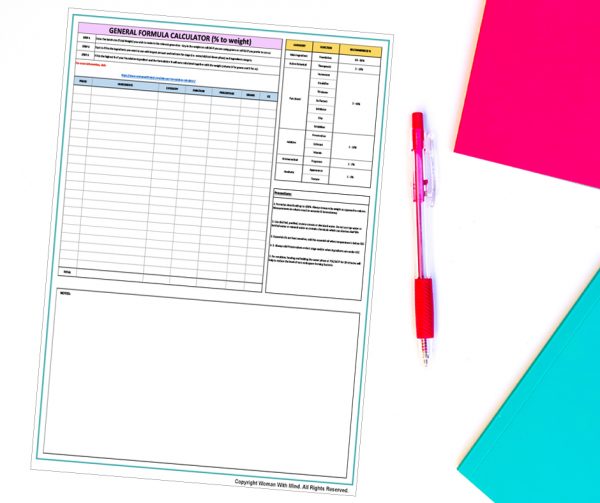
Recipe Formula Calculator (Excel & PDF)
Records formulas as percentages and converts to any batch size by weight. Built-in warning alerts if ingredient ratios go out of range.
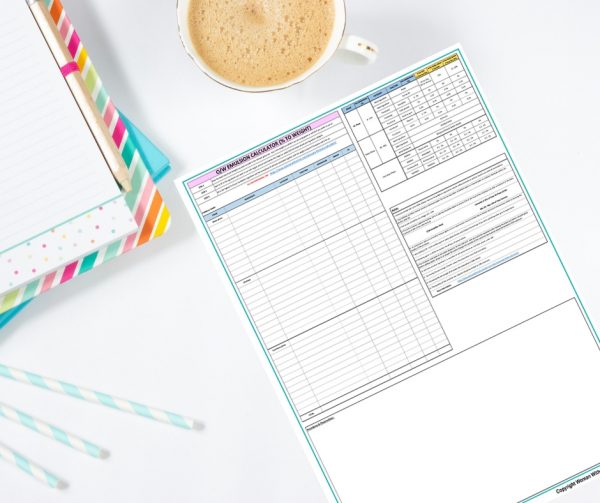
Emulsion Calculator (Excel & PDF)
Calculates O/W emulsion requirements by phase and batch size — includes starter formulas for lotion, moisturiser and body butter.
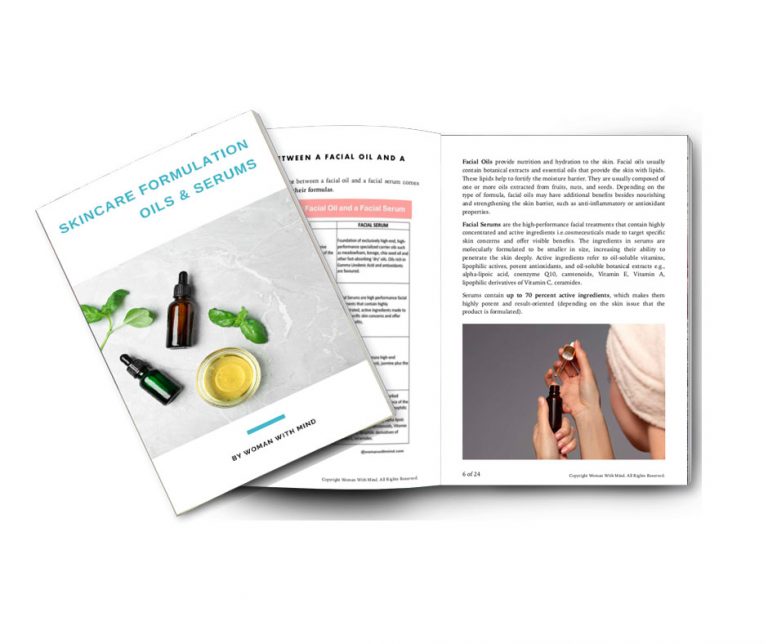
Oils & Serums Formulation
Learn to formulate facial oils and serums from scratch — formula flowcharts, sample recipes and high performance ingredient guides.
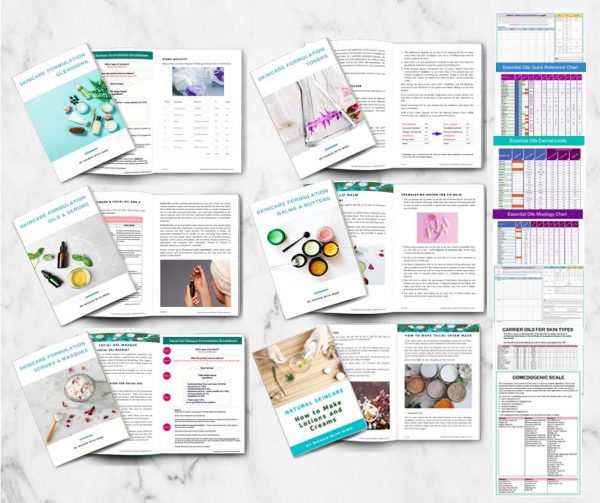
Skincare Formulation Super Bundle
Every formulation guide in one bundle at 20% off — includes all e-books and printables.
More Formulation Guides
Continue learning with these related guides from the Woman With Mind blog.
Conclusion
Switching from volume-based recipes to percentage-based formulation is the single biggest step you can take towards professional, consistent skincare making. Once you work this way, you can scale any batch up or down instantly and compare formulas properly. The Formula Calculator and Emulsion Calculator make it even simpler — all the maths is done for you.